Testing autonomous navigation
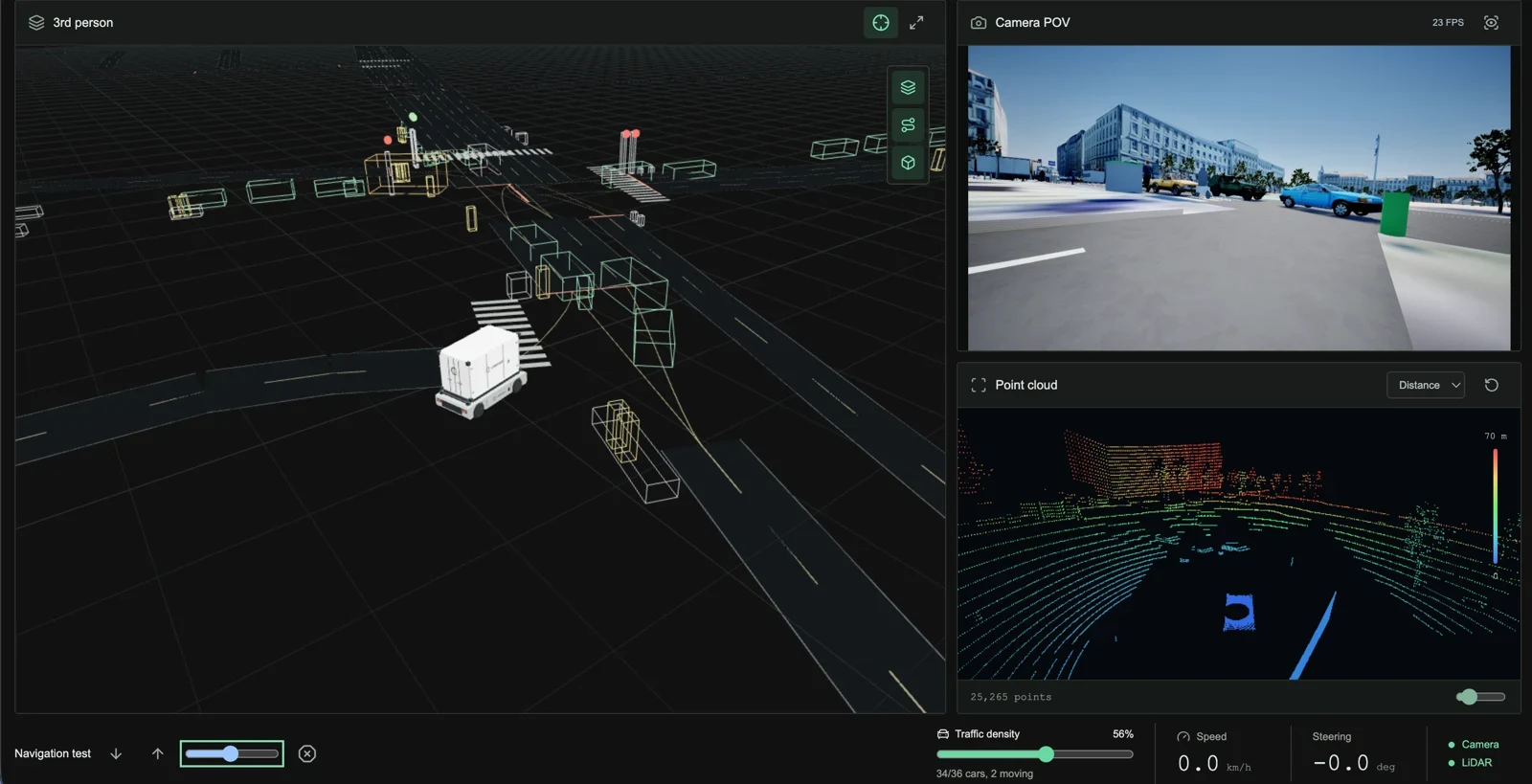
Simulation lets us repeat encounters, inspect perception outputs and test route changes before field testing. It complements tests on real hardware and waterways.
Make an encounter repeatable
Testing a navigation change is easier to interpret when the starting conditions are controlled. In simulation, we can return to an encounter and examine how a different decision changes the vessel’s path. The aim is to build a workflow in which scenarios can be revisited as the navigation software evolves.
Look beyond the final trajectory
The path a vessel follows is only part of the story. We also need to inspect what the system perceived, which objects it tracked and how those observations informed a manoeuvre. Looking at those stages together helps identify whether a problem began with the scene, the perception output or the navigation decision.
Carry the questions onto the water
A simulated result depends on the environment and vessel model used to produce it. It cannot establish how the complete system will behave on a real waterway. We use simulation to investigate scenarios and prepare questions for hardware and field testing, where sensing, vessel response and operating conditions must be checked together.